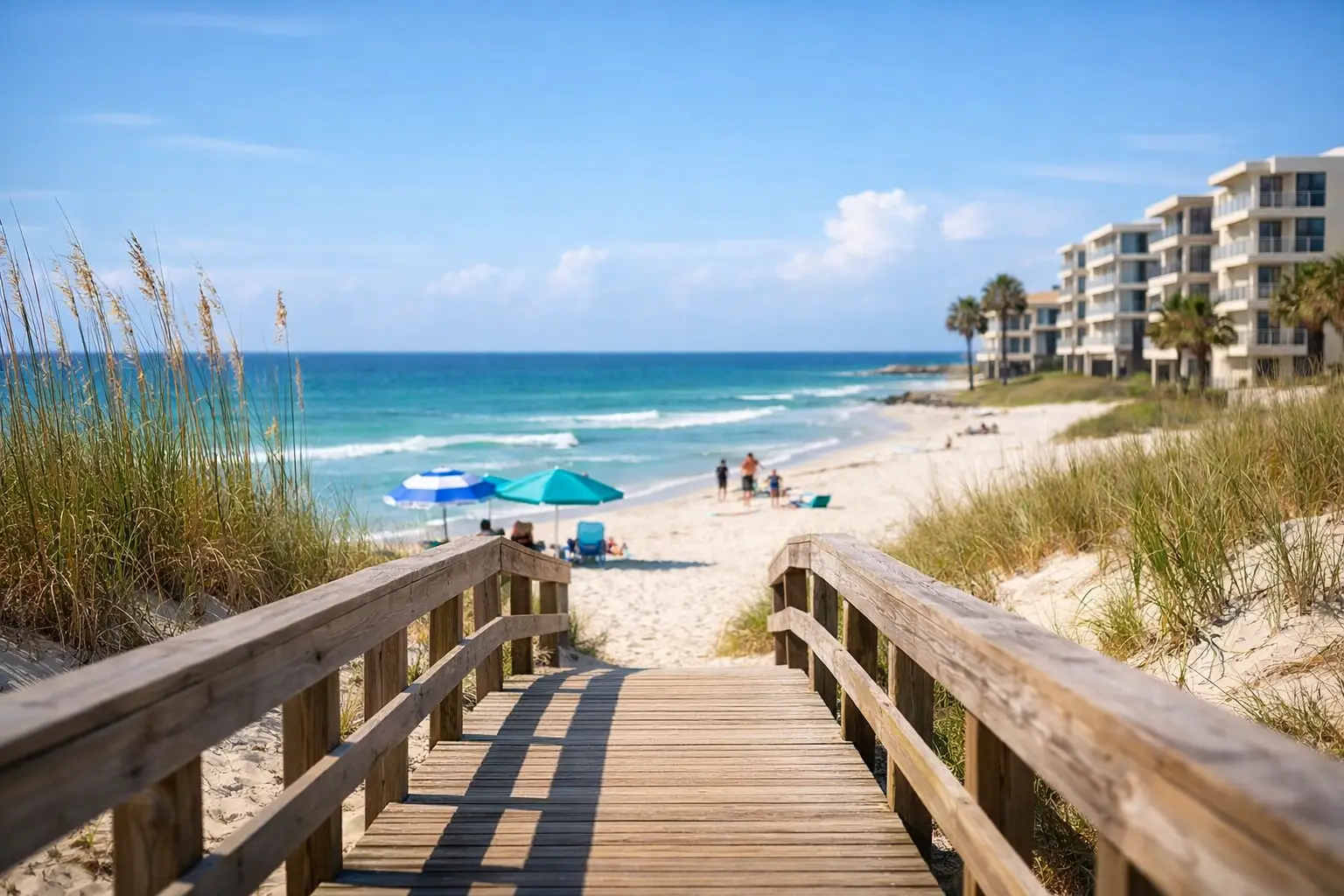
A calm-looking Gulf can still have powerful water moving beneath the surface. That is why rip current warnings deserve a place in your beach-day plan right alongside sunscreen, shade, and a check of the forecast. On North Padre Island, conditions can shift with wind, tides, sandbars, and passing weather. Knowing what a warning means gives you a better chance of making a smart call before anyone heads into the water.
What Rip Current Warnings Actually Mean
A rip current is a narrow, fast-moving flow of water that travels away from shore. It often forms when water pushed toward the beach by waves finds a path back through a break in a sandbar. The current can pull even a strong swimmer farther offshore faster than expected.
A rip current warning signals a serious and potentially life-threatening risk. The safest choice is to stay out of the water until conditions improve and local authorities indicate it is safe to return. This is not the day to test your swimming ability, let children wade unattended, or assume a float will keep someone safe.
You may also see a rip current statement or advisory in weather information. Terms can vary by agency and local messaging, but the practical takeaway is simple: elevated rip-current risk calls for extra caution, while a warning calls for avoiding the surf. Read the full message, check posted beach signage, and follow instructions from lifeguards and beach patrols if they are present.
Why Conditions Can Change So Quickly
The Gulf shoreline does not need dramatic storm waves to produce a dangerous current. A steady onshore wind, a distant storm system, changing tide patterns, or a reshaped sandbar can all alter how water moves near the beach. Conditions at one access point may also differ from another, particularly along a long stretch of open coast.
That is why yesterday's easy swim is not a reliable guide for today. It also explains why a beach can look inviting from a condo balcony or the edge of the dunes while still carrying a high risk in the surf zone. A quick conditions check before leaving your vacation rental can prevent a frustrating or dangerous change of plans after you arrive.
For families and groups, make that check part of the morning routine. If the water is not a good option, North Padre Island still offers plenty of ways to enjoy the coast: a long shoreline walk, sandcastle time, shell hunting, a picnic under shade, fishing from an appropriate location, or a relaxed afternoon by the pool.
How to Spot a Possible Rip Current
Rip currents are not always easy to identify. Some are visible as a darker channel of water, an area with fewer breaking waves, a line of foam or seaweed moving away from shore, or water that looks choppier than the surrounding surf. But these visual cues are not guaranteed. A current can be present even when the surface does not look obviously alarming.
Instead of relying on sight alone, use several signals together. Check the day’s official beach and weather information. Look for flags and posted notices at your access point. Watch the water for a few minutes before entering, and notice whether other beachgoers are staying close to shore. Most importantly, do not treat a quiet-looking patch of water as an automatic safe passage through the waves.
Flags and signs are your first stop
Beach flag systems communicate conditions quickly, but they are not decorations. A red flag generally means high hazard, and double red flags commonly mean the water is closed to public swimming. Local rules and flag meanings can differ, so read the signs where you park and follow the direction posted for that beach.
If there is no flag at a more remote area, that does not mean there is no risk. It means you need to be more conservative with your decision-making. Choose a staffed or more actively monitored beach when conditions are uncertain, especially if children or less-confident swimmers are with you.
What to Do When a Warning Is Issued
When a rip current warning is active, keep the plan simple: enjoy the beach, not the water. Stay well back from the wash zone, where unexpected waves can knock over children and pull gear toward the surf. Avoid climbing on jetties, piers, or rocks to get a closer look at rough water.
For a group trip, name one adult to keep an eye on children near the shoreline. It is easy for a beach day to become scattered between chairs, coolers, games, and photo stops. A clear boundary - no one beyond the wet sand, for example - removes confusion and makes supervision easier.
Do not let an inflatable toy, a dropped sandal, or a drifting ball turn into a rescue situation. Let it go. Personal belongings can be replaced; entering hazardous surf for an item is never worth the risk.
If You Are Caught in a Rip Current
The first job is to stay as calm as possible. A rip current pulls away from shore, but it does not pull a person underwater. Panic and exhaustion are the bigger dangers.
Do not try to fight directly against the current by swimming straight toward the beach. Instead, float or tread water to conserve energy, signal and call for help, and swim parallel to shore when you are able. Moving sideways may take you out of the narrow channel of fast-moving water. Once free of the current, angle back toward shore with the waves rather than forcing a direct route through the strongest flow.
If you cannot make progress, continue floating, keep signaling, and wait for assistance. Many currents weaken beyond the breaking waves, which can give you time to recover your breathing and make better decisions.
If someone else is in trouble
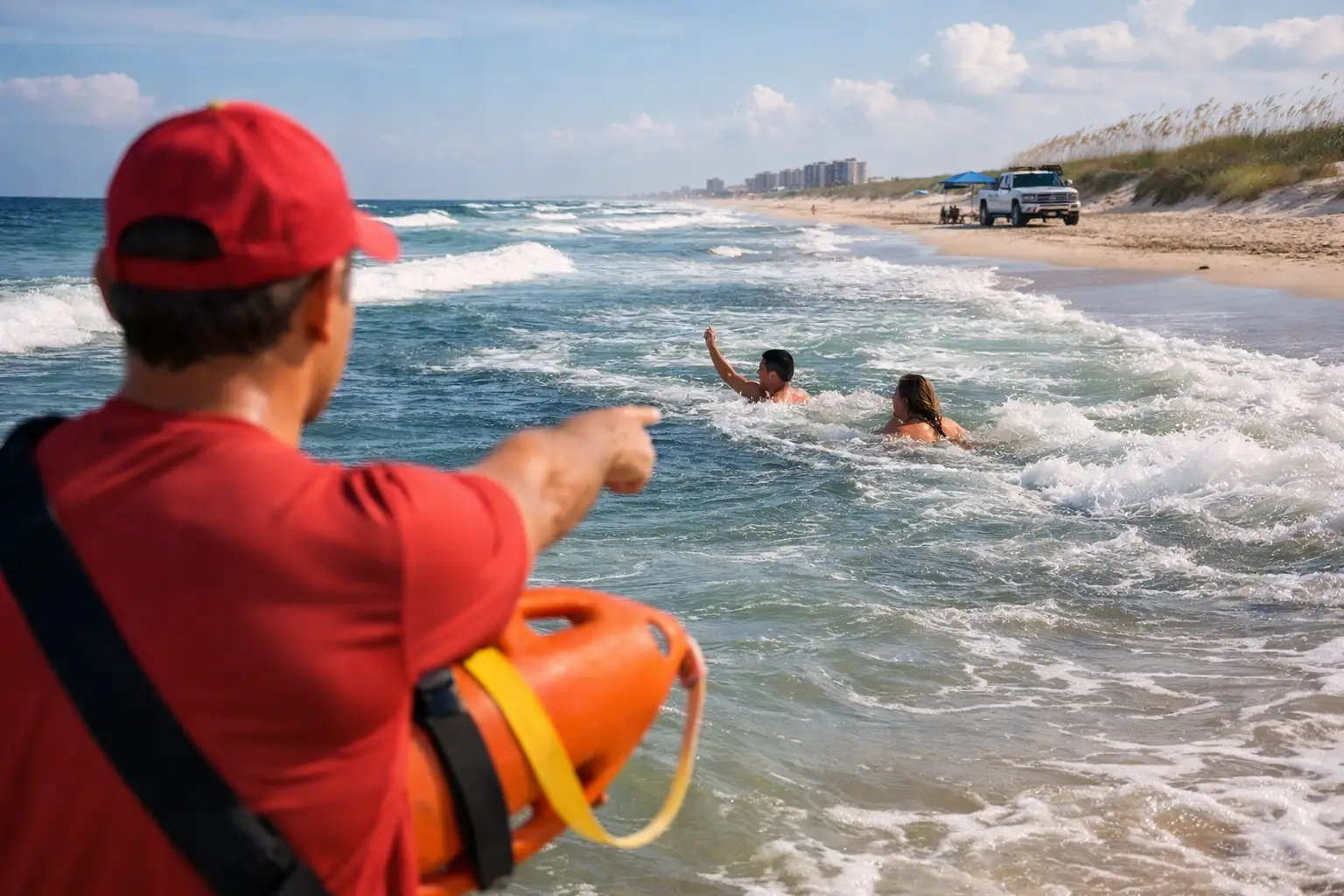
Call 911 or alert lifeguards and beach patrol immediately. Point continuously at the person so responders and other bystanders can track their location. If you can reach them from shore with a flotation device, rope, cooler, or other object, do so without entering the water.
Untrained bystanders often become victims when they swim out to attempt a rescue. Unless you have appropriate rescue training and equipment, staying on shore, calling for help, and extending flotation is the safer way to help. Keep children and other swimmers out of the water while assistance is on the way.
A Better Beach Plan for Families and Groups
The best water-safety decisions happen before the first chair is unfolded. Build a little flexibility into your itinerary, especially during windy periods or after changing weather. A beach day does not have to be an all-or-nothing swim day.
Pack drinking water, shade, and activities that work on dry sand. Choose a meeting point in case family members get separated. Give kids a simple rule they can repeat: ask an adult before going near the water. For friend groups, agree that nobody swims alone, particularly in early morning, at dusk, or after drinking alcohol.
It also helps to match the beach to the group. Families with young children, first-time Gulf visitors, and guests who are not confident swimmers may prefer a day with lighter surf and clear safety conditions. More experienced swimmers still need to respect posted warnings. Fitness is not a substitute for reading the water and following local guidance.
Let Conditions Shape the Day, Not Ruin It
A warning can feel disappointing when you came to North Padre Island for the Gulf, but a change of plan is part of being a smart coastal traveler. The shoreline is still a beautiful place to slow down, watch the waves, take family photos, and enjoy the salt air from a safe distance.
Before heading out, check current conditions and make the call that fits the day. Whitecap Beach is here to help make your island time easier, but the water always gets the final say. A beach getaway is better when everyone returns to the rental tired from a good day, not shaken by a close call.