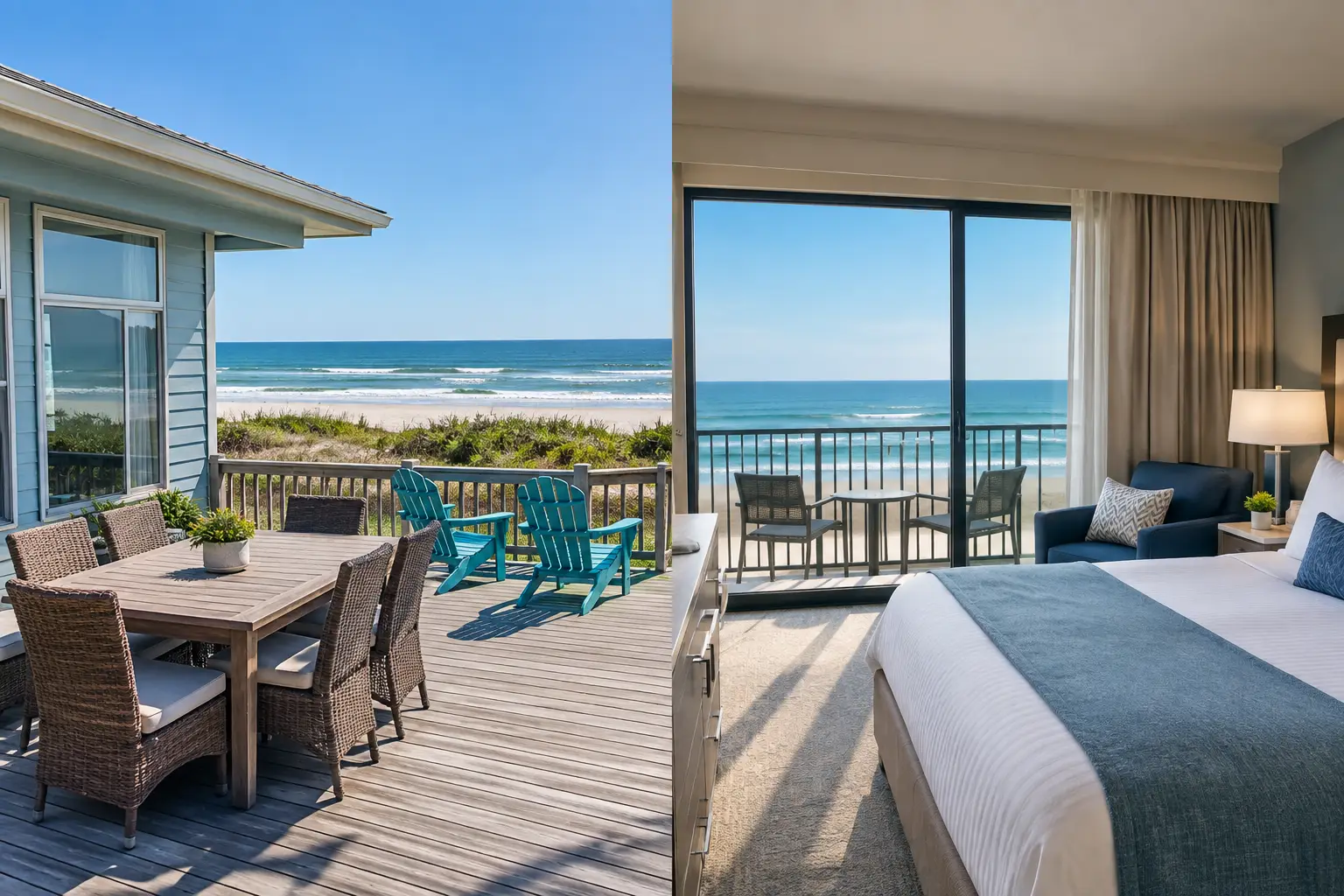

A beach trip can feel very different depending on where everyone puts their bags down. After a sandy afternoon, a family may want a full kitchen and room for board games. A couple may prefer a polished lobby, a poolside drink, and zero thought about making the bed. The hotel versus vacation rental decision is less about which option is better overall and more about how you want your Gulf Coast getaway to work.
For visitors to North Padre Island and Corpus Christi, the right stay can shape everything from your grocery run to how early you make it to the beach. Start with the kind of trip you are actually taking, not the type of accommodation you usually book.
Hotel Versus Vacation Rental: The Core Difference
Hotels are built around consistency and service. You generally know what to expect: a private room, daily assistance, shared amenities, and a front desk or on-site staff to help when plans change. They can be a smart fit for short stays, business travel, solo travelers, and anyone who wants a simple home base with minimal planning.
Vacation rentals are built around living space and flexibility. Instead of fitting your trip around one room, you can choose a condo, townhome, beach house, or canal-side property that suits the people and plans you are bringing along. You may have separate bedrooms, a kitchen, outdoor space, laundry, parking, and room to settle in.
Neither choice automatically delivers a better vacation. A two-night anniversary escape has different needs than a six-night fishing trip with grandparents, kids, coolers, and a dog. The best fit is usually the one that removes the most friction from your particular trip.
Space Changes the Pace of the Trip
Space is often the clearest reason travelers choose a vacation rental. A separate bedroom means a child can nap without ending the evening for everyone else. A living room gives friends a place to hang out without sitting on beds. Multiple bathrooms can make mornings far less hectic when a group is trying to get out the door for a charter, brunch, or a beach day.
For families, that breathing room matters after a long day in the sun. Kids can have a snack and wind down while adults make dinner or enjoy the patio. For friend groups, shared common areas make the stay part of the trip rather than simply a place to sleep.
Hotels can still work well when your plans are centered outside the room. If you expect to spend most of your time at restaurants, attractions, or the beach, a clean room and convenient location may be all you need. Couples and solo travelers may find that a larger rental adds space they will not use.
Kitchens, Laundry, and the Details That Add Up
A hotel simplifies certain things. There may be an on-site restaurant, complimentary breakfast, fresh towels, and staff available when you need help. For a quick weekend, that can feel wonderfully easy.
A vacation rental offers a different kind of convenience: the ability to handle everyday needs on your own schedule. A kitchen makes coffee before sunrise, packed lunches for the beach, and late-night snacks easy. It also helps groups avoid the cost and logistics of taking every meal out. Laundry is especially useful after sandy swimsuits, wet towels, or a full day on the water.
This does not mean every rental has the same setup. Before booking, check the listing for the kitchen equipment, laundry access, parking arrangement, pool rules, elevator availability, and beach gear. A well-equipped condo can be ideal for a family, while a property without an elevator may be less practical for guests with mobility concerns or lots of gear.
The same rule applies to hotels. Confirm what is included rather than assuming. Pool access, parking fees, resort fees, breakfast, pet policies, and room configuration can change the total experience and cost.
Cost Depends on Who Is Coming and How Long You Stay
Comparing nightly rates alone can be misleading. A hotel can be the better value for one or two people on a short stay, particularly when the room includes amenities you will use. It also keeps the booking decision straightforward.
For a longer stay or a larger group, a vacation rental may provide better value because the total cost is shared across more guests. A three-bedroom property can be more comfortable and sometimes more practical than reserving several hotel rooms. Cooking a few meals, doing laundry, and using one shared living space can also reduce the expenses that tend to build up over a week.
Still, look at the full price before deciding. Vacation rentals may include cleaning fees, service fees, and taxes that affect the total. Hotels may add parking, pet, or resort-related charges. Compare the final number for the full stay, then weigh it against what you receive. A lower price is not a bargain if it leaves your group cramped, far from your preferred activities, or unable to bring the dog.
Privacy and Service Make a Real Trade-Off
Vacation rentals usually offer more privacy. You are less likely to share walls, hallways, elevators, or common spaces with other guests, especially in a standalone home. That can be valuable for families with young children, guests who keep early fishing hours, or groups that want relaxed evenings without feeling like they are disturbing anyone.
The trade-off is that vacation rentals are not typically staffed like full-service hotels. Check-in instructions may be digital, and housekeeping is usually arranged between stays rather than every day. If you need a fresh stack of towels or immediate assistance with a minor request, a hotel may feel more convenient.
A professionally managed vacation rental offers a useful middle ground. You keep the independence of a private place to stay while having a local team for clear arrival details, maintenance concerns, and area guidance. That support is especially helpful when weather shifts, a fishing plan changes, or you need a reliable recommendation close by.
Location Should Match Your Beach Day
On North Padre Island, location is not only about the distance to the shoreline. Think about the beach access you prefer, whether you want to be near dining, how much driving you want to do, and whether your group needs boat-friendly parking or easy access to fishing spots. A canal-view stay may be a natural fit for anglers, while a beachfront condo can make sense for travelers who want to walk out with chairs and a cooler.
Hotels are often positioned for straightforward access to major roads, restaurants, and visitor services. Vacation rentals can provide more variety, from quiet residential pockets to waterfront communities and properties close to the sand. That variety is a strength, but it requires a little more attention during planning.
Look beyond the map pin. Check the type of view, the nearest beach access point, parking limitations, stairs, and whether the property matches your priorities. Whitecap Beach helps travelers pair those practical details with local insight, so the stay supports the trip you have in mind.
When a Hotel Is the Better Choice
Choose a hotel when convenience matters more than square footage. It is often the right call for a short overnight stay, a spontaneous trip, solo travel, or a couple that wants daily service and shared amenities. It can also be a good option when you prefer a central, predictable experience and do not plan to cook, entertain, or spend much time indoors.
A hotel may also be the safer choice if you want the reassurance of a staffed front desk around the clock. For some travelers, that structure is worth more than having a kitchen or extra room.
When a Vacation Rental Is the Better Choice
Choose a vacation rental when the people you are traveling with are a major part of the experience. Families, multigenerational groups, friend trips, pet owners, and anglers often benefit from extra bedrooms, shared spaces, full kitchens, laundry, and location-specific features like a patio, canal view, or proximity to the beach.
It is also a strong choice when your trip lasts more than a few nights. The longer you stay, the more useful it becomes to have a place that feels less like a room and more like your own coastal home base.
Before you book, picture a normal day on the trip. Where will breakfast happen? Where will wet towels go? Can everyone sleep comfortably? Is there room to store fishing gear, beach toys, or a pet crate? Those answers usually make the choice clear.
Your beach getaway does not need the biggest property or the most amenities. It needs a stay that gives you more time for the water, the people you came with, and the easy island moments you will remember after you head home.