
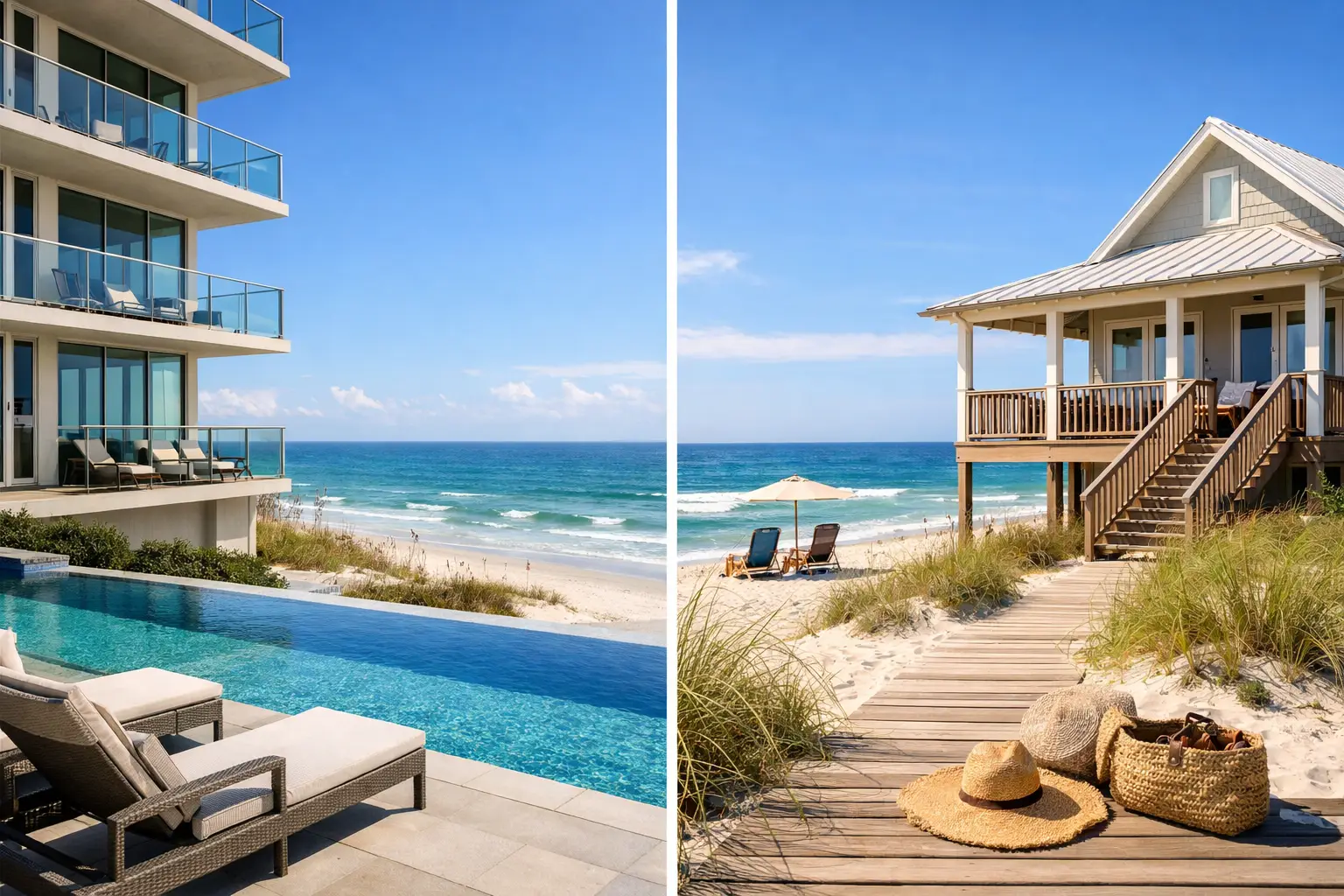
A lot of coastal buyers start with the same picture in mind - morning coffee by the water, a property that pays for itself part of the year, and a smart long-term asset. Then the real question shows up: condo vs beach house investment. It sounds simple, but the better choice depends on how hands-on you want to be, how often you plan to use the property, and what kind of rental demand you want to capture.
On the Texas Gulf Coast, that choice can shape everything from your monthly carrying costs to your guest mix. A beachfront condo may look easier on paper. A beach house may offer more upside and more flexibility. Both can work well, but they work well for different kinds of owners.
Condo vs beach house investment: the core difference
At the highest level, condos usually trade space and control for convenience. Beach houses usually trade convenience for flexibility, privacy, and a broader guest appeal. That one difference affects nearly every part of ownership.
A condo investment often comes with shared amenities, professional exterior maintenance, and a more predictable ownership experience. If your goal is to simplify operations, especially from out of town, that structure can be attractive. You may have HOA fees and stricter rules, but you also avoid handling every exterior issue yourself.
A beach house investment gives you more room to shape the guest experience and fewer limitations on how the property functions. You may be able to accommodate larger groups, add storage for fishing gear, create better outdoor living space, and stand out more clearly in the vacation rental market. The trade-off is that you are responsible for more of the moving parts.
Purchase price and carrying costs
For many buyers, budget narrows the decision quickly. In many coastal markets, condos offer a lower entry point than standalone beach homes. That lower purchase price can make financing more approachable and may let buyers enter a vacation rental market sooner.
But the sticker price is only part of the math. Condo owners usually pay HOA dues, and those fees can be significant in buildings with pools, elevators, insurance obligations, and shared maintenance. Special assessments can also appear when a building needs major repairs.
Beach houses often avoid those recurring association costs or carry lighter HOA structures, but they bring their own expense profile. Insurance can be higher. Exterior maintenance is your responsibility. Roofs, siding, decks, stairs, fencing, drainage, landscaping, and storm prep all land on your side of the ledger.
If you are comparing two properties, the useful question is not Which one is cheaper? It is Which one gives me the better total cost structure for my goals? A condo with high dues can sometimes cost as much to carry as a house. A house with older systems can become more expensive than expected in a hurry.
Rental income potential is not always about nightly rate
Some buyers assume beach houses always make more money, and sometimes they do. Larger homes can command higher nightly rates, attract family reunions and group trips, and generate stronger revenue in peak travel periods. If the property is well-located and set up for guests, the upside can be meaningful.
Still, higher nightly rates do not automatically mean better returns. Beach houses also come with higher cleaning costs, more wear and tear, and larger maintenance bills. Vacancies can hit harder when your overhead is higher.
Condos often perform well because they serve a wide slice of the vacation market. Couples, small families, weekend beachgoers, and anglers often prefer a simpler stay with direct beach access, parking, and amenities. In some markets, condos book more consistently across the year because they match common travel patterns better.
That is why revenue should be evaluated as occupancy, average daily rate, seasonality, and operating costs together. A beach house may have bigger revenue spikes. A condo may provide steadier, easier-to-manage income. Neither model wins by default.
Guest demand and who you want to host
A smart investment starts with the guest, not the building.
If you want to attract larger groups, multi-family trips, longer stays, or travelers who care about private outdoor space, a beach house usually has the edge. Extra bedrooms, a full kitchen, parking, pet-friendliness, and room to gather all make a house more versatile. That matters in a destination market where people want the property to feel like part of the vacation, not just a place to sleep.
If you want a property that appeals to shorter stays and simpler travel planning, a condo can be a strong fit. Guests often like the low-friction setup. They know what to expect, they appreciate shared amenities, and they may be less concerned with square footage if the location is right.
On North Padre Island, for example, the right answer often comes down to whether you want to serve a smaller, high-frequency guest segment or a larger-group vacation segment. Both are active. They just behave differently.
Management, maintenance, and how involved you want to be
This is where many investment decisions become clear.
A condo can be easier to own from a distance. Shared maintenance and a more compact footprint often mean fewer emergencies and fewer operational surprises. That does not mean hands-off ownership, especially in a short-term rental, but it usually means fewer systems to monitor.
A beach house asks more from you or your property manager. There is more square footage, more exterior exposure, and more opportunity for weather-related issues. Salt air, wind, and moisture are hard on coastal homes. Outdoor showers, decks, gates, and exterior HVAC components all need attention.
That extra effort can be worth it if the property earns more and gives you a stronger personal-use experience. But buyers should be honest here. If you want a low-drama investment, the freedom of a beach house may feel less exciting after your third maintenance call in a busy summer month.
Rules, restrictions, and operational flexibility
One of the biggest differences in a condo vs beach house investment is how much control you have.
Condos may come with rental restrictions, pet rules, parking limits, occupancy caps, and design constraints. Some buildings are vacation-rental friendly. Others are less so, even if short-term rentals are technically allowed. Before buying, you need a clear picture of what the HOA permits now and how stable those rules are.
Beach houses often give owners more operational flexibility. You may have more freedom on furnishings, outdoor amenities, self-storage, branding, and guest experience. If you want to create a premium rental identity, that flexibility matters.
At the same time, freedom requires judgment. More autonomy means more decisions, more compliance work, and more exposure if local regulations shift. The upside is real, but so is the responsibility.
Lifestyle value matters more than many investors admit
Not every coastal buyer is a pure investor. Many want a property that earns income and still feels like their place.
If you picture quick weekend escapes, beach access without much setup, and a lock-and-leave ownership style, a condo may fit your life better. You arrive, settle in, and spend more time on the beach and less time thinking about upkeep.
If you picture hosting extended family, bringing pets, storing gear, and building traditions around the property, a beach house may justify the extra work. The emotional return can be part of the investment too, especially if you plan to use the home regularly.
This is where buyers often make better decisions when they stop chasing a generic best investment and start asking what kind of ownership experience they actually want.
Which option makes more sense for first-time buyers?
For first-time vacation rental buyers, condos are often easier to understand and operate. Lower purchase prices, simpler maintenance, and more predictable guest use can reduce the learning curve. If you are testing the market or buying your first coastal income property, that can be a real advantage.
For experienced owners or buyers with a clear plan for larger-group rentals, a beach house may offer stronger long-term upside. You can differentiate more, control the guest experience more fully, and potentially build more value through design and amenities.
A practical way to think about it is this: condos tend to be easier to start with, while beach houses may offer more room to grow - if you have the budget and the operational appetite to match.
The better investment depends on your version of easy
Some buyers define easy as lower entry cost, fewer maintenance tasks, and a simpler ownership model. For them, a condo is often the better fit. Others define easy as having more space, more flexibility, and a property that works beautifully for both guests and family use. For them, a beach house can be the smarter move, even with more responsibility attached.
If you are weighing properties in Corpus Christi or North Padre Island, local demand patterns, HOA rules, insurance realities, and guest behavior matter just as much as the property type itself. A well-positioned condo can outperform an average beach house. A thoughtfully designed beach house can justify the extra complexity.
The best coastal investment is usually the one that still feels right after you run the numbers, picture the day-to-day ownership, and think about the kind of memories you want the property to hold.